
A dumb phone is basically the opposite of a smartphone.
It is a simple mobile phone designed to handle the basics, like calling, texting, setting an alarm, and maybe taking a few photos. Most dumb phones do not have social media apps, endless notifications, large app stores, or all the other features that keep people glued to their screens.
They are not actually “dumb.” In some ways, choosing one might be one of the smarter decisions you can make.
What Can a Dumb Phone Do?
The exact features depend on the phone, but most dumb phones can: 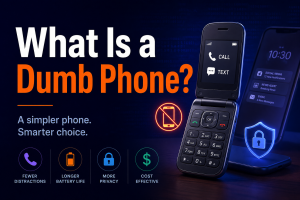
Make and receive calls
Send text messages
Store contacts
Set alarms and reminders
Use a calculator
Take basic photos
Play music
Access limited internet features
Some newer models also include GPS, email, mobile payments, or messaging apps like WhatsApp. These are sometimes called feature phones because they sit somewhere between an old flip phone and a modern smartphone.
The main difference is that the experience is much more limited.
That is the whole point.
Why Are People Switching to Dumb Phones?
Smartphones are useful, but they also demand a lot of attention.
You check one notification, then somehow find yourself watching videos 30 minutes later. You open your phone to reply to a text and end up scrolling through social media without even thinking about it.
A dumb phone removes many of those distractions.
People are switching because they want to:
Spend less time scrolling
Be more present with family and friends
Improve their focus
Reduce social media use
Sleep better
Stop checking work messages all day
Give themselves more privacy
Save money on expensive devices and plans
For some people, a dumb phone is not about rejecting technology. It is about deciding how much technology they actually want in their life.
Are Dumb Phones More Private?
They can be.
Smartphones collect a huge amount of information. Your apps may track your location, browsing habits, purchases, contacts, interests, and daily routines.
A basic dumb phone usually has fewer apps and fewer services running in the background. That can reduce the amount of personal information being collected.
However, a dumb phone does not make you invisible.
Your mobile carrier can still know things like who you called, when you sent a text, and which cell towers your phone connected to. Phones with GPS, internet access, or downloadable apps may still collect additional information.
A dumb phone can reduce your digital footprint, but it does not completely erase it.
Are Dumb Phones Safer From Scams?
In some ways, yes.
A person using a basic phone may be less exposed to:
Fake social media advertisements
Malicious apps
Browser pop-ups
Social media impersonation scams
Fake online shopping websites
Some forms of mobile malware
But scammers can still reach you through calls and text messages.
A dumb phone will not stop someone from sending you a fake delivery message, pretending to be your bank, or calling you about a made-up emergency.
You still need to slow down, verify the message, and avoid sharing sensitive information with someone who contacted you unexpectedly.
The phone may be simpler, but the person using it still needs to stay aware.
What Are the Downsides?
Switching to a dumb phone sounds great until you realize how many everyday tasks now depend on a smartphone.
You may lose easy access to:
Maps and turn-by-turn directions
Banking apps
Ride-sharing services
QR code menus
Two-factor authentication apps
Digital tickets
Group chats
Mobile payment apps
High-quality photos
Work email
Emergency weather alerts from certain apps
This can make a dumb phone inconvenient, especially if your job, travel, banking, or family communication relies heavily on smartphone apps.
Some people also find that texting on a physical keypad takes longer than expected.
Do You Have to Give Up Your Smartphone Completely?
No.
You do not have to throw your smartphone in a drawer and disappear from the internet.
Some people use a dumb phone during evenings and weekends. Others keep their smartphone at home and use it more like a small tablet. You could also remove distracting apps, turn off notifications, or use an app blocker before buying another device.
Another option is carrying a dumb phone as your main phone while keeping your smartphone available for travel, banking, photos, and other specific tasks.
The goal does not have to be zero technology.
The goal can simply be less unnecessary technology.
Is a Dumb Phone Right for You?
A dumb phone might be worth considering if you feel like your smartphone controls too much of your attention.
It could be a good fit if you regularly:
Check your phone without knowing why
Lose time scrolling
Feel stressed by constant notifications
Struggle to focus
Reach for your phone during every quiet moment
Want a simpler device for a child or older family member
Before switching, make a list of the smartphone features you truly need. You may discover that you rely on fewer apps than you thought.
You may also discover that your phone is doing a lot more than helping you make calls.
Final Thoughts
A dumb phone is a basic mobile phone that focuses on communication instead of constant connection.
It will not automatically fix your attention span, protect you from every scam, or give you perfect privacy. But it can remove many of the apps and notifications designed to keep you checking your screen.
Sometimes the smartest phone is the one that does less.