
Social engineering is when a scammer manipulates a person into giving up information, sending money, clicking a link, or doing something they normally would not do.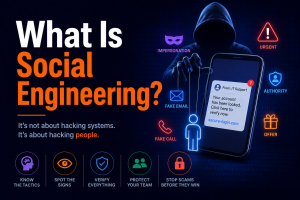
Instead of hacking through a complicated security system, the scammer goes after the person using it.
They might pretend to be your boss. They might act like someone from your bank. They might send you a fake delivery alert or claim there is an urgent problem with one of your accounts.
The message can look completely normal. That is what makes social engineering so effective.
Social Engineering Is Basically Hacking a Person
When most people think about cybercrime, they picture someone sitting in a dark room typing code into a computer.
Social engineering is usually much simpler than that.
The scammer creates a believable situation and waits for you to react. They may try to make you feel scared, excited, curious, rushed, or even helpful.
The goal is to get you to act before you stop and think.
For example, you might receive an email that says:
Your account has been locked. Click here immediately to restore access.
The scammer is not trying to break into the account themselves. They are trying to convince you to hand them the information they need.
Why Does Social Engineering Work?
Social engineering works because people naturally trust certain situations.
We trust messages that appear to come from our boss. We respond quickly when something feels urgent. We want to help coworkers. We do not want to miss a package, lose access to an account, or get in trouble at work.
Scammers understand this.
They use normal human behavior against us.
A social engineering message will often include one or more of these tactics:
Urgency
The message tells you something must happen immediately.
You may be told your account will be closed, a payment is overdue, or your boss needs something before a meeting.
Fear
The scammer makes you believe something bad has happened.
They may claim your bank account was compromised, your computer has a virus, or you owe money to the government.
Authority
The scammer pretends to be someone you are expected to listen to.
This could be an executive, police officer, government agency, IT employee, or financial institution.
Curiosity
The message gives you just enough information to make you want to click.
It might mention a confidential document, an unexpected photo, a complaint, or a payment you do not recognize.
Excitement
Some scams promise prizes, refunds, job opportunities, investments, or free products.
The offer is designed to make you focus on the reward instead of the warning signs.
Helpfulness
The scammer may ask you to solve a problem for them.
They might pretend to be a coworker who cannot access an account or an executive who needs gift cards for an event.
Common Types of Social Engineering
Social engineering can happen through email, text messages, phone calls, social media, and even face-to-face conversations.
Here are some of the most common examples.
Phishing
Phishing is when a scammer sends a fake email that appears to come from a trusted person or company.
The email may ask you to click a link, open an attachment, sign into an account, or provide personal information.
Smishing
Smishing is phishing through text messages.
A smishing message might look like a delivery update, banking alert, unpaid toll notice, or account verification request.
Vishing
Vishing is social engineering through a phone call.
The caller may pretend to be from your bank, a government agency, technical support, or law enforcement.
They might also spoof the phone number so the call appears to come from a legitimate organization.
Business Email Compromise
Business email compromise happens when a scammer pretends to be an executive, employee, vendor, or business partner.
They may request a wire transfer, payroll change, invoice payment, gift card purchase, or sensitive document.
These attacks can be especially dangerous because they often look like normal business communication.
Pretexting
Pretexting is when a scammer creates a fake story to gain your trust.
For example, someone may claim they are conducting an internal audit and need your password. They may pretend to be a new employee who needs help accessing a system.
The story is the pretext.
Baiting
Baiting uses something tempting to get your attention.
This could be a free download, prize, giveaway, or even a USB drive left in a public place.
Once the person takes the bait, the scammer may gain access to information or install malicious software.
Impersonation
Impersonation is exactly what it sounds like.
The scammer pretends to be someone else.
They may use a copied profile picture, fake email address, spoofed phone number, or artificial intelligence to sound or look like a real person.
What Does a Social Engineering Attack Look Like?
Imagine you receive a text that appears to come from your company’s CEO.
The message says:
I am heading into a meeting and need your help with something. Can you purchase five gift cards for a client event? I will reimburse you this afternoon.
The request sounds important. It feels urgent. It appears to come from someone with authority.
That combination can make people act quickly.
But if you slow down and verify the request through another method, you may discover that the CEO never sent it.
That small pause can stop the entire scam.
How to Spot Social Engineering
Social engineering messages are not always full of spelling errors or obvious warning signs.
Some are extremely convincing.
Pay attention when a message:
Creates unusual pressure or urgency
Requests passwords, verification codes, or financial information
Asks you to bypass a normal process
Includes an unexpected link or attachment
Requests gift cards, cryptocurrency, or wire transfers
Comes from an address that is slightly different from the real one
Asks you to keep the request secret
Does not sound like the person who supposedly sent it
Offers something that seems too good to be true
One warning sign may not prove something is a scam. Several warning signs together should make you stop and verify.
How to Protect Yourself
The best defense against social engineering is not a complicated piece of software.
It is awareness.
Before responding to an unexpected request, stop and ask yourself:
Does this make sense?
Was I expecting this message?
Is this person asking me to do something unusual?
Can I verify the request another way?
Do not use the phone number, email address, or link included in a suspicious message. Contact the person or company using information you already know is legitimate.
If the message appears to come from a coworker, call them directly.
If it appears to come from your bank, use the number printed on the back of your card.
If it appears to come from a delivery company, visit the company’s website yourself and enter the tracking number.
Employees Are Often the First Line of Defense
Businesses can invest in strong security systems and still be vulnerable if an employee is tricked into opening the door.
That does not mean employees are careless.
It means scammers are very good at creating believable situations.
Security awareness training helps employees recognize those situations before they turn into expensive incidents. AwairLab uses short, comic-style microtraining delivered regularly to help security lessons stay visible and easier to remember.
Stop, Verify, and Protect
Social engineering attacks are designed to make you react.
Your best defense is to slow down.
Stop before clicking, paying, downloading, or sharing information.
Verify the request using a trusted method.
Protect your accounts, your information, and your company by reporting anything suspicious.
Scammers only need one rushed decision to succeed. Taking a few extra seconds can be enough to stop them.